
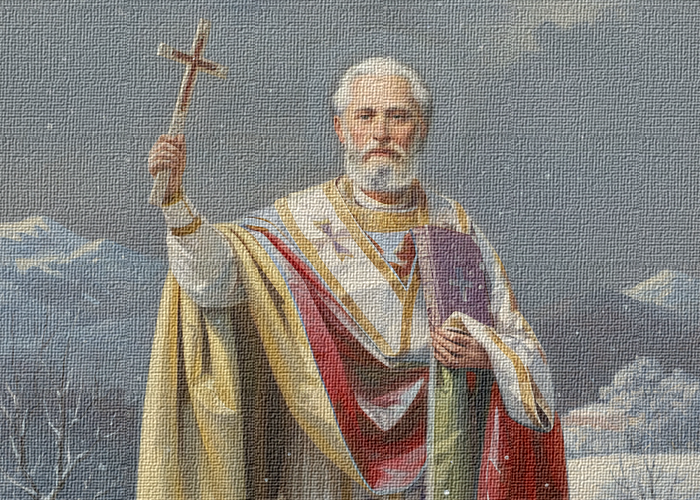
The answer to the question in the title is YES. Santa Claus is and was indeed real, but he wasn’t just a gift-giver; he was a devout disciple of Christ who performed deeds in secret to bring glory to God, not himself. The name Santa Claus comes from the name he is more properly known as, Saint Nicholas.
Early Life, Generosity, & Vocation: Born in the third century, St. Nicholas was orphaned at a young age. He later became inspired by the Gospel and gave away his inheritance to the poor. His vocation led him to become a bishop, and he attended the Council of Nicaea.
Defending the Faith: At the Council of Nicaea, Nicholas strongly opposed the heresy of Arianism (which denied Jesus’ full divinity). Legend says he got so frustrated that he may have punched the heretic Arius in the face. This story highlights his zeal for the truth, while also serving as a lesson on managing anger.
Miracles: Several miracles are attributed to him, including calming stormy seas (making him the patron of sailors) and reportedly raising three boys, who were murdered, back to life.
Origin of Gift-Giving: The most famous legend involves a poor father who could not afford dowries for his three daughters, which put them at risk of falling into prostitution. Nicholas secretly dropped bags of coins into their window at night to save them. This act is the origin of the tradition of secret gift-giving and putting treats in shoes.
Historical Evidence: His remains are kept in Bari, Italy. Scientific studies of his bones revealed a broken nose, which could have resulted from his “rough and tumble” nature or, more likely, from torture and imprisonment under the Emperor Diocletian.